





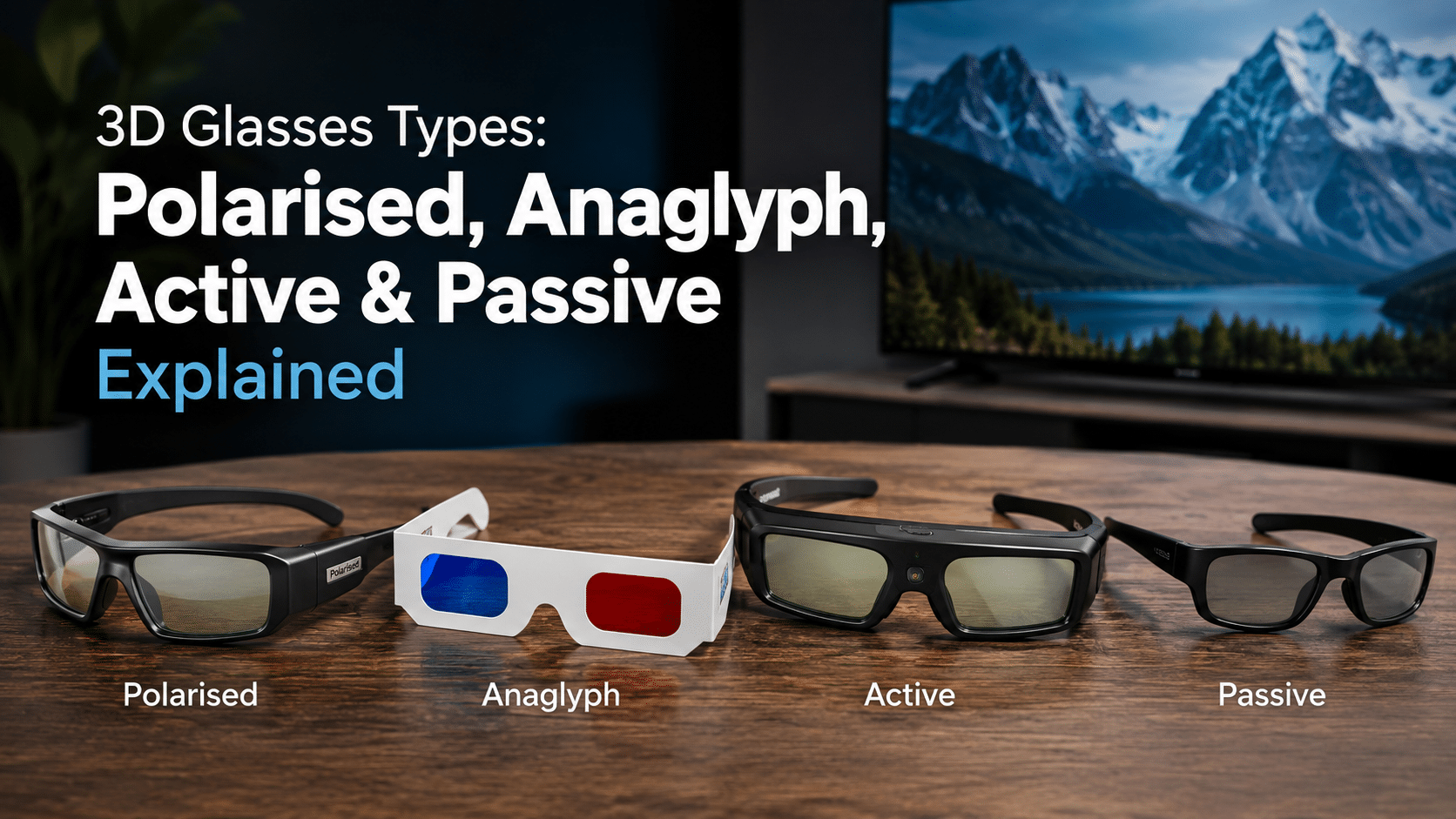
Wholesale buyers in the 3D glasses category face a confusing terminology landscape. Most consumers use “polarised 3d glasses” as a generic term for any 3D eyewear, but the category actually splits into four genuinely different technologies — anaglyph, polarised (linear and circular), active shutter, and passive cinema-grade — each with different optical principles, manufacturing requirements, and target retail channels.
This guide explains the four technology types, where each is used, the difference between paper and plastic constructions, cinema-chain compatibility considerations, and what wholesale buyers in the AV, cinema-supply, and promotional-merchandise channels should specify.
The Four Types of 3D Glasses
1. Anaglyph 3D Glasses (Red / Cyan)
Anaglyph is the oldest 3D technology — the classic red-and-blue (or red-and-cyan) cardboard glasses used in 1950s cinema and modern educational books. The technology works by colour-filtering: each eye sees only the part of the image of its assigned colour, creating depth perception when the brain combines the two views. Anaglyph glasses are inexpensive to produce, lightweight, and work on any standard colour image — but they significantly distort colour perception.
Wholesale demand for paper 3d glasses in anaglyph format remains steady — they are sold to publishers (children’s pop-up books), schools (educational kits), and promotional-merchandise channels (corporate giveaways, magazine inserts).
2. Polarised 3D Glasses (Linear & Circular)
The polarised 3d glasses, polarized 3d film, and polarized 3d movies categories use polarising filters to send a different image to each eye. The cinema projector outputs two images simultaneously, each polarised at a different angle (linear) or rotation (circular); the viewer’s glasses contain corresponding polarising filters that block the “wrong” image for each eye.
Two sub-variants matter at procurement:
- Linear polarised — older technology; sensitive to head tilt (tilt your head and the 3D effect breaks down). Cheaper to produce; still used in some cinema chains and most consumer 3D printing kits.
- Circular polarised — modern standard; head-tilt-tolerant. Used by RealD cinemas worldwide and by most consumer passive-3D TVs (where the technology is still in legacy use).
The 3d pictures for 3d glasses polarized retail tier serves photographers and VR-content creators producing polarised 3D imagery for printed display.
3. Active Shutter 3D Glasses
Active shutter is the premium consumer 3D-TV technology. Each lens is a small LCD screen that rapidly opens and closes (typically 60 times per second per eye, alternating with the screen) so each eye sees only the image intended for it. The glasses are battery-powered and synchronise wirelessly with the source display.
Active shutter is no longer a volume retail category — most consumer 3D-TV brands have discontinued the format — but it remains in use in some professional simulation and visualisation applications. We do not currently manufacture active shutter glasses; the wholesale demand is best served by specialist electronics distributors.
4. Passive Cinema 3D Glasses
Passive 3d glasses and glass passive 3d glasses are circular-polarised glasses optimised specifically for the cinema environment — robust plastic frames, optical-grade circular polarising lenses, and durable construction for thousands of viewing cycles. The dominant cinema standard worldwide. This is the category most cinema-chain wholesale buyers stock for 3d glasses for theater programmes.
Materials: Cardboard vs. Plastic
Cardboard / paper construction is used for:
- Anaglyph 3D glasses (the classic red/cyan format)
- Linear-polarised promotional and magazine-insert glasses
- The 3d glasses note card format — a thin cardboard frame designed to fit inside greeting cards or magazine inserts
- Solar eclipse glasses (an adjacent category — see our wholesale solar eclipse glasses guide)
Plastic / PET construction is used for:
- Cinema-grade passive circular-polarised glasses (the dominant cinema-supply format)
- Premium retail 3D-TV glasses
- Reusable promotional 3D glasses
Cinema-Chain Compatibility
The major cinema systems worldwide use different polarisation technologies, and glasses must match the system in use:
- RealD — circular polarised; the most widely deployed cinema 3D system globally.
- IMAX 3D — linear polarised in legacy theatres; circular polarised in newer IMAX laser theatres.
- Dolby 3D — wavelength-selective filtering (a different technology entirely); requires special Dolby 3D glasses.
- MasterImage 3D — circular polarised; compatible with RealD glasses.
Wholesale buyers supplying multi-chain cinema groups should standardise on circular-polarised passive glasses where possible — they cover the largest installed base.
Wholesale Buyer Channels
Cinema-Chain Wholesale
Multi-thousand-unit orders of passive circular-polarised glasses, often in branded retail multipacks. Key retail considerations include hygiene packaging (single-use disposable vs. cleaning-friendly reusable) and durability for high-volume cinemas. Cross-list with our 3D glasses and solar eclipse glasses category.
AV & Promotional Programmes
Custom-printed cardboard frames in linear-polarised or anaglyph format, supplied as promotional inserts, magazine giveaways, and trade-show merchandise. MOQs from 1,000 units; full-colour CMYK / Pantone branding standard.
Astronomy & STEM Education
While 3D glasses are not the same as solar eclipse glasses, the manufacturing tooling overlaps. The astronomy / STEM channel typically sources both — see our solar eclipse range for ISO 12312-2-certified eclipse-viewing products and our 3D range for stereoscopic education kits.
3D Pictures for 3D Glasses Polarized
A small but growing retail tier serves the 3d pictures for 3d glasses polarized demand — photographers and VR creators producing printed or digital 3D imagery viewable through polarised glasses. The companion product range includes lenticular printed cards and stereoscopic photography kits. We supply matched-pair glasses for these creator-channel programmes on flexible MOQs.
Wholesale, OEM & Private Label
Eleroyal is an in-house cardboard-printing and lens-laminating factory. Short lead times for custom-printed runs, full-colour CMYK / Pantone branding on cardboard frames, and ISO 12312-2 documentation for the adjacent solar-eclipse range. Buyers running B2B promotional programmes should also explore our fresnel sheets and card magnifier ranges for bundled flat-optic offerings.
Caring for 3D Glasses in High-Volume Cinema Use
Cinema-grade circular-polarised glasses see thousands of viewing cycles per pair in a busy multiplex. Three operational practices extend service life and protect image quality:
- Hygiene cleaning between sessions — wipe lens surfaces with a 70% isopropyl alcohol microfibre wipe; never spray cleaner directly on the polarising film as it can lift the laminate. Steam sterilisation cycles common in newer cinemas (2020s installations) extend useful life to 200+ wear cycles per pair.
- Storage between programmes — store glasses flat in a stacked tray rather than thrown loose into a return bin. Compressed cardboard or plastic stackable trays prevent frame deformation that causes the polarising filters to misalign.
- Replacement cycle — even with proper care, the polarising film degrades after about two years of heavy commercial use. Build a planned replacement cycle into your wholesale forecasting; we offer trade-in discount programmes for cinema chains returning end-of-life glasses for material recycling.
VR Headset 3D vs. Cinema 3D — Different Categories
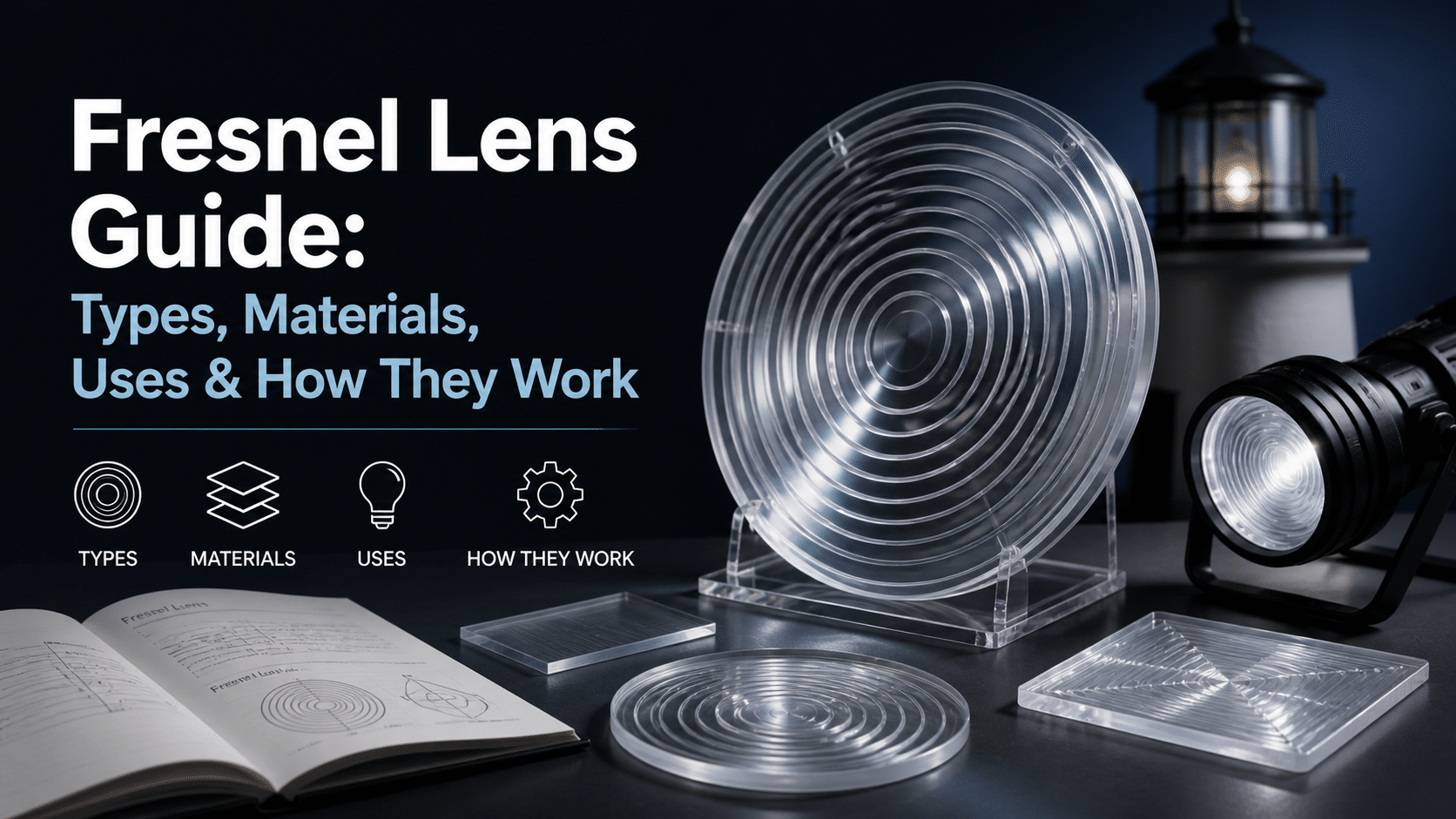
Buyers occasionally confuse VR headset optics with passive 3D cinema glasses — they are entirely different product categories. VR headsets use binocular display screens with built-in fresnel optics (covered in our fresnel lens complete guide) to project a stereoscopic 3D image; passive 3D cinema glasses simply filter the light from a polarised cinema projector. The wholesale supply chains are completely separate — VR headsets are electronics distribution; passive 3D glasses are AV / cinema-supply distribution.
If your buyer is asking for “3D glasses” to use with a VR-content programme, clarify whether they need actual passive cinema glasses or whether they have confused the term with VR headsets. The wrong assumption can waste a procurement cycle.
Frequently Asked Questions
What is the difference between anaglyph and polarised 3D glasses?
Anaglyph uses colour filtering (red and cyan lenses) and works on any colour image; polarised 3D uses light-polarisation filtering and requires a matching polarised projector or display. Polarised gives much better colour and image quality.
Are linear or circular polarised 3D glasses better?
Circular polarised — they tolerate head tilt without losing the 3D effect, which linear polarised does not. Modern cinema systems are almost all circular polarised.
Will 3D glasses from one cinema work at another?
Usually yes for any RealD or compatible chain — most cinemas worldwide are circular polarised. They will not work at Dolby 3D theatres, which use a different wavelength-selective technology.
Are paper 3D glasses reusable?
Anaglyph and linear-polarised cardboard glasses can be reused indefinitely; modern circular-polarised cinema glasses are typically supplied in single-use hygiene packaging or returned for cleaning at the end of the screening.
What MOQ should I expect for wholesale 3D glasses?
Anaglyph cardboard glasses ship from 1,000 units with full-colour custom branding. Cinema-grade passive plastic glasses typically MOQ 5,000+ units for branded production runs.
Wholesale Magnifier Sourcing — Talk to Our Team
Eleroyal is a CE, RoHS & ISO 9001-certified manufacturer based in China, supplying retailers, B2B distributors, and brand owners worldwide. We support flexible MOQs, OEM and private-label runs, custom packaging, and full export documentation. Whether you are placing your first order or scaling an existing programme, our sales team can match the right product specifications to your channel — request a wholesale quotation or browse our full magnifier catalogue.
Common buyer profiles we work with include retail chains stocking low-vision and senior-care programmes, optical and pharmacy distributors, jewellery and gift-shop chains, AV and cinema-supply wholesalers, education and STEM-curriculum distributors, electronics-repair and maker-space supply houses, and Amazon FBA and ecommerce sellers building branded product programmes. We provide sample units against deposit, and our minimum-order specifications scale across product format, custom branding complexity, and lead-time tolerance — so first-time buyers can validate the product on their channel before committing to a full retail launch.